Thursday, December 17, 2009

Set Design: The Consul

The Consul is an opera by Gian Carlo-Menotti. It is set in a post-WWII Eastern European country that is unnamed, but we know it is extremely oppressive. In representation of the oppression and despair of the people, the set is very minimal and very dark and depressing looking. There are two settings within the show. The first one is the Sorels' apartment, where Magda, the mother, John, and the baby live. The second set is the Consulate. Both should be dark and dingy.
One thing that would remain constant between both scenes would be the back wall. It would be painted to look like concrete and have one door in the center, and one window on either side. The windows would have black iron looking bars. The door would have no windows-just a solid wooden door.
The floor would be painted to look like a basic wooden floor, dark in color or very rough and old looking.


For Magda Sorel's apartment, the windows would be covered in brown curtains. There would be a basic four legged kitchen table mid stage right, painted a green/gray color. Around the table, four rough-looking mismatched chairs. In the down left corner, there is a beautifully crafted cradle, symbolic of the hope of youth and of the prosperous life they once had before oppression. Beside the cradle there is a rocking chair. Against the back wall on stage left is a long, wide bookshelf, used for housing props such as the candlesticks and telephone used by Magda. To the left of the door, between the door and bookcase, is an antique gas heater. The rocker and bookshelf would both be in the green/gray color of the table. The cradle would stay in its original wooden color.


The Consulate would have the same four legged gray/green table, but it would serve as the secretary's desk instead of a kitchen table. It would sit up right at an angle. The gray/green book case would be at the same angle up left, and would have two stools in the gray/green color. It serves as a writing desk. Along stage right and stage left, there are six chairs on each side, facing inward. These are the "waiting" chairs where the people wait to see the Consul or the secretary. The curtains from the apartment are removed.

Theatre and Psychology

While many people involved in the theatre department here are convinced that I am a major, I am in fact only a theatre minor. My major has recently become Psychology. The world of psychology fascinates me, much like the world of theatre. Both disciplines are extremely varied in the number of ways that you can involve yourself. Just like there are multiple disciplines in the theatre, such as acting, directing, and designing, there are multiple alleys in psychology as well. There is clinical, occupational, childhood, forensic, etc... There is so much to learn about both fields that anyone could spend the rest of their lives learning new and exciting information about either discipline. In that same vein, both fields are always changing. In theatre, there are always new innovations, better technology, new stories, new concepts; in psychology, the science is always moving and advancing, and our understandings are becoming deeper every day. This is what keeps both theatre and psychology so very interesting-you can never ever learn everything there is to know. There is always plenty of room for growth and development.
The theatrical world, just like the psychological, gives us a great look into the psyche of mankind. Through the ages, the kind of theatre produced and the content of that theatre has always given a unique insight to the thought processes of the society. In psychology, we are given a similar opportunity to peer into the inner-most workings of the human brain. In both instances, we sometimes find exciting material, and sometimes we are disturbed by what we find, but we always are left with a more enriched understanding of what it means to be human.
It is important for any performance professional to have some familiarity with and understanding of human psychology. I think it would be beneficial for actors to take at least an introductory psych class, if not a few extras such as abnormal psychology (especially if preparing for a role in which this applies) or personality theory. In order to bring characters fully to life on stage, it is important that the actor understands how human psyches work- things like what pushes us, how we can be influenced by factors such as stress and trauma, and how relationships play into who we are and how we act. Psychology can inform an actor when he or she needs to portray a person with a psychological disorder or someone directly interacting with someone with a psychological disorder.
Just as an understanding of psychology can benefit a theatre artist, an understanding of theatrical elements can benefit a practitioner of psychology. Much of psychology involves an exchange of energy between clinician and client or patient. If the clinician is familiar with theatre, he or she may be more able to bounce their energy off of the client or use the clients energy to decide how to go about the interview and which tactics will be the best. Sometimes, a psychologist's job involves a bit of acting. If a clinician is called upon to do an evaluation of a criminal and that criminal is dangerous and confrontational, the psychologists will have to fool the person in a way so that the subject will trust the clinician enough to put his or her guard down. The subject must believe that the psychologist is on his or her side. In this instance, a familiarity with the theatrical would be quite beneficial to the psychology professional.

The Public Theater

The Public Theater in New York City is a theater that has several branches in New York. The Shakespeare in the Park branch performs free Shakespeare in the outdoors, and the Public Theater keeps ticket costs low through donations and patrons. In a sort of mission statement, the Public Theater says this about what they do: "Fifty years ago, Joseph Papp founded The Public Theater with the belief that Shakespeare belonged to the people. From that simple vision grew a vibrant theater where all of the world's voices, rhythms, and cultures converge. The Public is dedicated to embracing the complexities of contemporary society and nurturing both artists and audiences through productions that reflect the city it serves-diverse, brilliant, raw, and alive. As a community of artists, The Public stays true to Joseph Papp's legacy by continually recreating itself and evolving within its mission to always be a place of inclusion and a forum for ideas." Another mission statement reads this way: "As the nation's foremost theatrical producer of Shakespeare and new work, The Public Theater is dedicated to achieving artistic excellence while developing an American theater that is accessible and relevant to all people through productions of challenging new plays, musicals and innovative stagings of the classics."
Currently the Public seems to be mostly producing new plays, with its current season full of world premiers such as "The Brother/Sister Plays Part 1 & Part 2", "Idiot Savant", and "The Book of Grace" to name a few. The Shakespeare in the Park branch is doing a rotating repertoire this season, performing The Merchant of Venice and The Winter's Tale on alternating nights.
The Public theater fosters a constant commitment to new and emerging talent in actors and technicians alike. Encouraging new artists has been a part of their philosophy from the very start. They encourage young actors to send unsolicited headshots and resumes, and promise that every one will be hand evaluated and considered for current and future castings. This commitment to young talent is what inspires and draws me to this particular theater. Also, the Public offers a Shakespeare Lab, which is a tuition free professional development program for actors who already have professional credits. It offers the opportunity for an actor in the professional world to learn and grow by studying classically under some of the most respected authorities in classical acting- and they get to do it for free. This program and the fact that it is available tuition free shows a real commitment to the art and to the artists. The theater engages in multiple community outreach programs, committed to bringing Shakespeare and theater to the schools' students. It brings free performances of Shakespeare to students, as well as exciting opportunities to interact with the performers and learn about the theater and acting.
The theater was originally founded as the Shakespeare Workshop by Joseph Papp. It is currently under the artistic direction of Oskar Eustis and the executive direction of Andrew D. Hamingson. The Public has won a total of 42 Tonys, 149 Obies, 40 Drama Desk Awards, 24 Lucille Lortel Awards and 4 Pulitzer Prizes. In 2005, the theater won a special Drama Desk award in celebration of its 50th anniversary.

The Importance of Being Ernest: A Review

Early in the Fall semester, IUP's Theater by the Grove presented a performance of Oscar Wilde's classic play The Importance of Being Ernest. The show was directed by Barb Blackledge, and the cast included Will Weimer as John Worthing, Addam Wawrzonek as Algernon Moncreif, Erica Pealstrom as Gwendolyn, Amanda Hohman as Cecily, Kayleigh Thadani as Lady Bracknell, Kait LeRoy as Miss Prism, Chris Anthony as Dr. Chausuble, Tyler McPherson as Lane, and Ashely Whitesel as Merrimen.
I thought that overall, each actor had a very strong understanding of the script and the dialogue that they were saying. The language was not all that different from the language of today, but there were some differences, and the actors managed to make the dialogue easy for the audience to understand as well. This shows that they had a good understanding to begin with. For the most part, each actor had a strong connection with their character and the other actors onstage. In particular, the proposal scene between Gwendolyn (Erica) and Jack/Ernest (Will) went very well because of how skilled the actors were at bouncing their energy off of one another. Throughout scenes in which Miss Prism and Dr. Chausuble were involved, you could always tell that there was an energy between them, even when they were not speaking to one another. All of the actors had developed very specific mannerisms that were consistent throughout the performance. Addam's Algernon, for example, had a great deal of gesticulations and ways of walking and moving about that were very specific to that character. This shows that his character was very fully developed and he was connected. Also, Chris's Chausuble had an unmistakable set of mannerisms that were very specific, very consistent, and very well thought out. They gave his character a full sense of life. Whenever Lane came onstage, he brought a whole new kind of energy with him. Will made great use of expression in his Jack; while his physical movements were not as noticeable (because his Jack was very upright and moved with purpose), his facial expressions were very helpful in conveying his characterization. I thought that the cast worked very well together as an ensemble; each actor bringing his or her own part to the whole, to make a unified piece. I could not see any one of them vying for the spotlight. The show was a great example of an ensemble piece.
The play itself is of course a classic, and a time tested part of the theatrical canon. This is due to the skilled writing of Oscar Wilde. The dialogue is quick and witty, often very funny. The characters all seem to have very distinct and well developed personalities, while at the same time poke fun at very stereotyped characters. The content of the play remains interesting because it is a commentary on the frivolity of high society and class- subjects that are still relevant and often satired today.
I thought that the director, Barb Blackledge, did a fabulous job of taking this classic piece of theatre and making it her own while remaining loyal to the original concept. She chose to set in in the 1920s instead of the original 1880s. This unique and interesting vision was evident throughout the play; the set was 20s art deco, the costumes were indicative of the time, as was the music. For scene changes, jazz music played and actors danced on and off with set pieces. It all lent to a very jazzy, fun, 1920s feel, which fit the light and fun mood of the play. There was a moment in the beginning of the second act that I felt was especially interesting. She had the actors physically "rewind" and replay the last few minutes of the end of the first act, and then continue on. This was due to the fact that she decided to cut Act II in half and only have one intermission instead of the original two. I thought that her choice to "rewind" and replay was an interesting and fun one. It brought the audience back into the world of the play by reminding us what we had just seen, and then moving on. I thought it was very creative and fit in well with the mood.
The light design was very well done and quite appropriate. The actors appeared to be well lit, and the scenes outside in the garden were lit as though it were daytime. I did not feel distracted by the lights at all, which is an important feature of a good light design. The sound design was also done quite tastefully. The music all fit well to the time period and the mood of the play. In one particularly impressive sound effect, they made it sound as though Jack was running up the stairs and into a room over the heads of the audience. The costume designer also did an excellent job. All of the costumes were period, and each gave a little clue to the personality of the character. For instance, Algy first appeared in a purple suit, a clue to his flamboyant and eccentric personality.
Overall, my experience with this performance was a very positive one. Tickets cost $8 for students and $14 for adults. Personally, I thought this performance was well worth the cost of a ticket. I thought that the quality of the actors and the design elements was that of a very high end college production, which is definitely what The Importance of Being Ernest was.

What's New on the Great White Way

As is usually the case, there are a multitude of shows available to see on Broadway right now. Currently, it seems that the top ticket sellers are Billy Elliot, Memphis, and A Little Night Music. Other popular shows right now are The Lion King, Wicked, Jersey Boys, The Phantom of the Opera, Ragtime, In the Heights, and Finian's Rainbow, Mamma Mia, Mary Poppins, Chicago, Rock of Ages, Hair, Next to Normal, and White Christmas. Tickets for these shows are available on multiple websites online, such as http://ppc.broadway.com, http://tickets.orbitz.com/broadway.aspx, or http://www.telecharge.com/. If one prefers not to buy online, reserving tickets with the theatre box office itself is possible, but the recommended strategy is to buy from a discount ticket supplier online. Not only is it more convenient, but also often much cheaper.
Out of all of the popular shows right now, the one I would most like to see would probably the A Little Night Music. I really enjoy Sondheim, and the run on Broadway is currently starring Angela Lansbury as Madame Armfeldt and Catherine Zeta-Jones as Desiree Armfeldt. Angela Lansbury is one of the absolutely favorite actresses of the stage (maybe not the screen, but definitely the stage). The show is playing at Walter Kerr Theatre in New York and just opened on December thirteenth. The show was written by Hugh Wheeler, with music by Stephen Sondheim. This current incarnation is directed by Trevor Nunn and choreographed by Lynn Page. David Farley designed the costumes and the set, an impressive feat due to the importance of the elaborate costumes, and Hartley Kemp designed the lights. In addition to Angela Lansbury and Catherine Zeta-Jones, the cast includes Alexander Hanson, Aaron Lazar, Erin Davie, Leigh Ann Larkin, Hunter Ryan Herdlicka, and Ramona Mallory. The run of A Little Night Music on Broadway has had a good deal of success among critics. Catherine Zeta-Jones's performance has been praised numerous times in the reviews, as has Angela Lansbury's apparently incredibe portrayal of the aging process onstage as Madame Armfeldt.
Another show currently running that I would love to see is Hair. It is currently playing at the Al Hirschfeld Theater in New York. It opened on March 31, 2009. The production, written by James Rado and Gerome Ragni, was directed by Diane Paulus. Choreography was by Karole Armitage. Lights were designed by Kevin Adams, sound designed by a company called Acme Sound Partners, set designed by Scott Pask, and costumes designed by Michael McDonald. The current cast includes Gavin Creel as Claude, Will Swenson as Berger, Caissie Levy, Sasha Allen, Bryce Ryness, Vanessa Ray, Darius Nichols, Kacie Sheik, Andrew Kober, and Rachel Bay Jones. This revival has met incredible commercial and critical success; more so than any previous attempt at a revival. The critics are calling it breathtaking, exuberant, powerful, and flawless.
Currently on Broadway, there is a little something for everyone. There are a multitude of revivals, so there are options for lovers of more traditional fare. There are new musicals, appealing to those who are looking for something new and exciting. Many different musical tastes are also being catered to. Hair offers 60s rock, Rock of Ages offers 80s music, Chicago offers jazz, White Christmas offers the big band sound..the list goes on and on. In my opinion, this time could be called the Golden Age of Broadway due to the incredible variety and the awesome success of all the different genres of musical theatre.

Hair: The American Tribal Love Rock Musical

The Broadway musical "Hair" has been described as "a celebration of life, a love letter to freedom, and a passionate cry for hope and change." I think that that is a great summary of just why this musical speaks to me. I've listened to the soundtrack over and over, and I would absolutely love to have the opportunity to see it-and be thrilled to have a chance to work on it.
Set in the turbulent times of the late 1960s, Hair centers on a group of young hippies in New York including Berger, the leader, Claude, Sheila, Crissy, and others. The group takes on the feel of a Native American tribe, and searches for a new way, a way to change their world. They question authority, question society, tune in to Eastern philosophy, and live by a philosophy of peace and love. At times, they are forced to fight for liberation and freedom, but are "reborn" after the struggle. In one scene, the group attends a Be-In (a gathering of hippies common in the 60s, featuring music, speeches, marijuana, psychedelics, and a sense of community) and the men burn their draft cards in protest of the war and in symbolic gesture supporting freedom and peace. Claude, however, pulls his card out of the flame, unsure of his feelings about his place and serving in the war. The musical also feature a drug-induced trip sequence that turns bad for Claude because of his fears of the hippie society, his fears of the establishment, and his impending service in the military. Eventually, Claude is called to service, and he has to face that he will not be able to enjoy the pleasures of the lifestyle he's been living once a part of the establishment. There is the image of Claude in uniform, lying on a black sheet, symbolic of him leaving for war. The show ends on a high note, sailing back into its predominantly joyous tone for the end, when the whole group sings the joys of the hippie lifestyle.
Hair introduced a new niche to the world of musical theatre- it was the FIRST rock musical. The score is full of the rocking beats and psychedelic tunes common to the music of the 1960s. This opened up a place in the realm of the theatre for rock music and future rock musicals. Hair was also a commentary of the social environment of the times. It celebrated the rebellious and free spirit of the young people during the era of change and brought insight into their philosophy.
Hair was written by Gerome Ragni and James Rado with music by Galt MacDermot and lyrics by Ragni and Rado. It opened off-Broadway on October 18, 1967 at Joseph Papp's New York Shakespeare Festival Public Theatre, where it was directed by Tom O'Horgan. Interestingly, the play is set in October of 1967-it was very much a play of the times and for the times. After six weeks at Papp's, it moved to Cheetah's Discotheque, where it had to be performed with no intermission so the disco dancing could start at ten, and was seen by a long list of celebrities, including Barbara Streisand. After the Cheetah engagement, it was rewritten and restructured and thirteen songs were added, bringing the score to a total of thirty-three numbers. The show was largely recast, with 6 actors from off-Broadway making to to the Broadway production. It opened again on April 29, 1968 at the Baltimore Theatre, where it was hugely successful with audiences and critics and ran for 1750 performances. It was the 4th longest running musical on Broadway in the 1960s. There were at one time ten Hair companies on national tours. There was a brief revival on Broadway in 1977, but it ran for only one month. It has had much success in Australia, Germany, Denmark, Holland, France, Italy, Japan, and, since the Berlin Wall came down, has travelled for the first time to Poland, Lebanon, the Czech Republic, and Sarajevo, where ABC's Nightline discovered a very powerful production of the show amidst a great deal of war and suffering. Hair finally made it to South Africa with the demise of apartheid in the mid-1990s, where it opened to rave reviews and much acclaim. The show has never played in China, India, Vietnam, most African countries, and Antarctica & the Arctic. From these facts, we can see that, for the most part, where there is a spirit of freedom and liberation, this musical speaks to the people and connects with their desire for peace and love.

Wednesday, December 16, 2009

Am I Blue Costume Design

Am I Blue is a play by Beth Henley set in New Orleans in the 1960s. The two main characters, Ashbee Williams and John Polk Richards, are two lonely young people. The night the play takes place, it is raining.

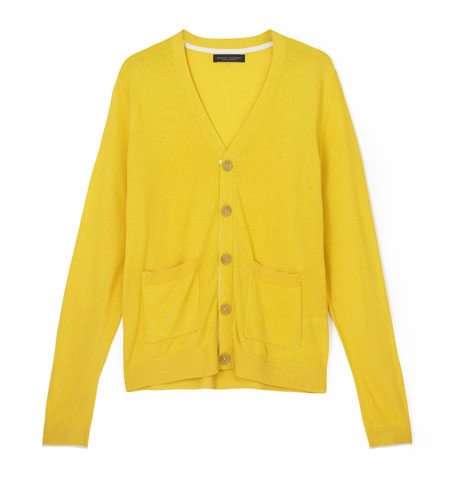
Ashbee's costume would consist of black opaque tights with red tube socks under a blue floral pattern dress. The dress would be belted (black belt) and have a pocket on each side. Over this, she would wear a yellow cardigan with two front pockets and buttons. Her hair would be in low pigtails. Because it is raining, she would wear red rain boots, a yellow rain coat, and on orange pom-pom hat.

John Polk's costume would start with a pair of sensible khakis. He would have a light blue button-down underneath a navy sweater. The sweater would have dark red and white trim around the neck, cuffs, and bottom. He would be wearing a dark red tie. His shoes would be brown loafers. He would have brown wire-framed glasses and short hair. He would wear a navy peacoat outside.