Thursday, December 17, 2009

Costume Design: Ladies and Gentlemen, the Rain

Ladies and Gentlemen, the Rain is a very interesting ten minute play by William Eno. It is simply two actors portrayed onto a giant screen by a camera. They are each making a dating service video, and through their alternating monologues, we learn who they are, what they fear, what they love, what they want, and their philosophies. The characters are simply referred to as "gentleman" and "lady." There seems to be nothing all that extraordinary about either of their appearances. Both characters give me a sense that they are kind of nerdy or at least dress fairly conservatively. Their dress would also be relatively understated and maybe a little bit old for their ages. They are both young, probably in their early or mid twenties.

Lady: I see the lady in a modest skirt. Brown, knee length, and maybe made from corduroy. She would also be in a scoop neck or not-so-low v-neck pale blue short sleeved shirt. She would be wearing a cream colored vintage cardigan with blue flower details. As her shoes, she would have on brown flats. Her hair should be long, and either worn straight down or in a medium height ponytail. In terms of jewelry, she would have a blue beaded necklace falling just at the collarbone.


Gentleman: The gentleman would be in blue jeans. The jeans would be dark wash, not too loose fitting, and with no holes. They should be just the perfect length. He would have a green dress shirt on, with a matching tie and a brown sport coat. He would be wearing traditional brown loafers on his feet. Instead of dress socks, he has on white socks.The fact that he is in jeans and a sport coat instead of dress pants with the sport coat would probably show to the audience that he wanted to look good from the waist up especially for the camera. He would be wearing black framed glasses.

Theatre in LIFE!

We can relate many of the different aspects of theatre to so many different facets of our daily lives. The exchange of energy that is so vital to the art of theatre happens each time you engage in a conversation with another individual. The energies that you bounce off of one another and how you react to those energies can influence the direction of the conversation, just as the energy exchanges in a live performance can dictate how well that performance is received and how well it goes for the performers. We each play different roles in our lives, depending on what situation we are in. Everyone plays different versions of themselves among friends, among relatives, in the workplace, etc... This can be compare to taking on different roles as an actor. In an even stronger connection to acting, we all have had times when we had to do something that we really didn't want to. In these times, we often act, and pretend that we are enjoying the activity more than we really are. As rebellious teenagers, we often get very good at being actors, especially when it comes to our parents. I for one wish I could put the performances I gave for my mother during my younger adolescence on my resume-they were some of the most convincing performances I ever gave. The symbolism and gestures that are necessary to theatre also play a large role in our lives. I am constantly using symbolic gestures in my day to day; from giving handshakes, to hugging, to waving, to throwing up the peace sign, to displaying obscene gestures in traffic, I use symbols and gestures to express my thoughts and feelings constantly, much in the way that theatre artists use them to express ideas or concepts. The primary function of the theatre, to tell stories, is wildly apparent in my daily life. The first thing I do when I get home in the evening is tell Will a story about how my day was and listen to his story. I hear stories from friends, from relatives, from strangers even. Often they are about mundane subjects, but they are always interesting, because they are the real life events of a real person; this is what theatrical performance-even the most abstract- strives to tell. People are all almost constantly in a state of storytelling. Even without speaking, our body language and face often tells the story of our day, our emotions, or even our lives. One of my favorite hobbies is people watching. I love to sit in a park or restaurant and read the people around me. I use their "costume"- how they are presenting themselves, their symbolic gestures, their movements, and their facial expressions to tell myself their story. I can watch as an outsider how each person relates and connects to the others around them, much like an actor should connect to the other characters onstage. The art of theatre itself is based on its function as a metaphor for real life; the stories and sagas that we observe in the theatre are meant to comment on and instruct us in life. Theatre naturally relates to the daily lives of people because it is meant to represent the art of fully living.

Theatre and Music

The two disciplines of theatre and music are inextricably linked to one another. Music simply cannot exist without some form of theatre; theatre, while it can exist without music, is enhanced ten fold in the presence of music. As a former music major, I chose to minor in theatre as a supplement to the training I would receive in the music department. I chose to stay in theatre for my new major, but that's a different post. In order for a musician to be the best musician they can possibly be, especially in the case of a singer, it is necessary that they have at least a fundamental understanding of what it is to be an actor. Musicians are actors; they bring a story to life in the form of a performance. As a singer, I felt that in order to be a singer worth my chops, I needed to be an actress as well. If a singer has the ability to extract a story from the music, create a character to tell that story, and be able to convey all of the emotions of that character in the singing and the movements and expression, the performance is made one hundred times more moving and more powerful than if they were to simply sing the notes and rhythms properly. Instrumentalists could also benefit, perhaps even more so, from theatrical training. Instrumentalists do not have the benefit of text to convey their story, so if they are able to create a story, a character and a unique voice for their instrument, it will facilitate the storytelling that is an essential element of live music performance.
On the other side, theatre depends very heavily on music to add to the depth of its meaning. Often, directors and sound designers will choose music to play during a scene in order to comment on the action or to add to the mood and tone of the scene. The proper music can take a scene from just a typical conversation to a whole new level of emotional power. Music can add suspense, tension, a sense of tranquility, or any number of other tones to a scene to which it is added. If you were to take the music away from any given moment it is written into, that particular moment would have a giant piece missing; music conveys feelings and senses that spoken word often lacks the ability to state.
Music and theatre are linked in the way that they are performed and how the performers connect with the audience. Most of the time, these arts are performed live in front of crowds, and there is little or no direct contact between the audience and performer(s). The exchange comes in the form of what is called temporal interplay. There is an exchange of energy that flows from performer to audience and back, and that energy can make or destroy the performance in both cases. Both of these arts are performance arts- they rely on an audience to make them come alive. They are also linked to each other in that, when combined, they make each other come alive.

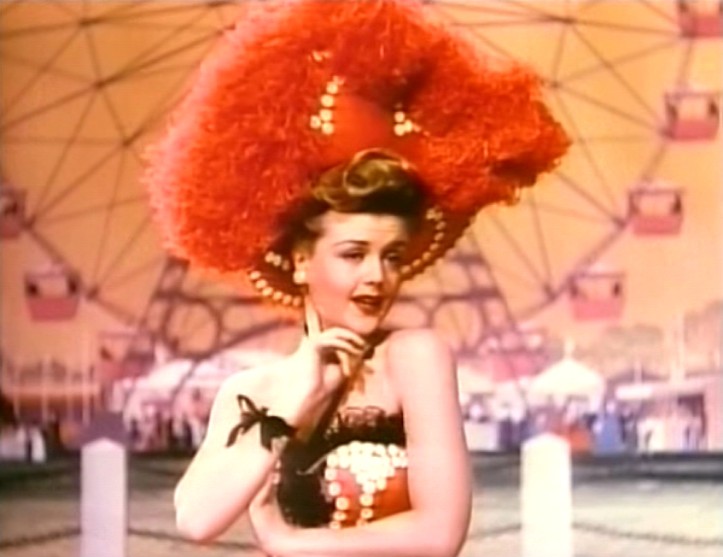
Angela Lansbury

Angela Lansbury has been a prominent actress in movies, on stage, and on television for seventy years. She was born on October 16, 1929 in London, England. The daughter of an actress, she was enrolled in the Ritman School of Dancing and then the Webber Douglas School of Singing and Dramatic Art. Just before the Germans bombed London, she and her mother and brothers managed to move to North America. They fled to Montreal, and then moved to New York City. From New York, they moved West to Hollywood. Here, she met Mel Ballerino, the man who would cast her in her first film roles. Her first appearance on screen was in the 1944 film Gaslight, for which she received nomination for Best Supporting Role for her portrayal of Nancy. She was also featured in The Picture of Dorian Gray in 1945, for which she received a Golden Globe for Best Supporting Actress and a nomination for an Academy Award for Best Supporting Actress. She went on to a great deal of success in both film and on the stage. Notable film appearances include her role as Ms Iselin in the Manchurian Candidate, for which she won the National Board of Review Award for Best Supporting Actress, her role as Miss Price in Bedknobs and Broomsticks, and her voice role as Mrs. Potts in The Beauty and The Beast. In all Angela Lansbury has appeared in fifty-two films, been nominated for twelve awards for these roles, and won five of these awards. Her first role on stage was in 1957 on Broadway in Hotel Paradisio. Her musical debut was in Anyone Can Whistle, the musical by Stephen Sondheim. In 1966 she won the Tony for Best Actress in a Musical for her part as the title role in Mame. Other stage roles include Mama Rose in Gypsy, for which she won the Tony and the Drama Desk Award for Best Leading Actress in a Musical; Mrs. Lovett, for which she won another Tony and another Drama Desk Award for Best Leading Actress in a Musical; Madame Arcati in The Blithe Spirit, for which she won the Tony and the Drama Desk Award for Best Featured Actress in a Play; and Madame Armfeldt in a Little Night Music, which she is still performing in at 84 years of age. In all, she has been nominated for ten awards for these roles, and has won eight of those awards. Lansbury's success has also been extended to television. Her television debut was in 1982, when she played Gertrude Vanderbilt Whitney in a miniseries called Little Gloria...Happy at Last. She portrayed Jessica Fletcher, crime writer, in a television show called Murder, She Wrote from 1884 to 1996. This is perhaps the role she is best known for by the general public. She has done several other shows, miniseries, and guest appearances since then, most recently appearing on Law & Order: SVU as Eleanor Duvall, a role for which she was nominated for an Emmy for Outstanding Guest Actress in a Drama. Over the years, she has been nominate 28 times. She has won at least five of these awards, which include Emmys, Golden Globes, and CableACE Awards. In 1995, Lansbury was named a Disney Legend. She has a star on the Walk of Fame, and she received the Screen Actors Guild Lifetime Achievement Award in 1997, New Dramatists Lifetime Achievement Award in 2000, The Acting Company's First Lifetime Achievement Award in 2002, The Actor's Fund of America Lifetime Achievement Award in 2004, an honorary Doctor of Humane Letters from the University of Miami, and a George and Ira Gershwin Award for Lifetime Musical Achievement. In 1994, Queen Elizabeth II appointed Angela Lansbury a Commander of the Order of the British Empire.

The great expanse of this woman's work and the many many honors that have been bestowed upon her over the years speak to just what an incredible artist she is. Her versatility and talent have carried her through role after role through the years, and her talent and charm only grow with her age. She still possesses that adorable smile that made casting directors love her so much in the 40s and 50s. She has the warm voice of a mother figure, both in speaking and singing, that makes audiences trust her and root for her implicitly. She has an approachable and relatable beauty and charm that has given her a special place in the hearts of the American people. Whether you knew her first as Mrs. Lovett or Jessica Fletcher or Mrs. Potts (like me!), you loved her. She was even adorable and charming and motherly as the maniacal Mrs. Lovett. She brings a certain something special to each role, and Broadway will lose one of its most legendary and gifted performers when she is no longer on the scene.

Set Design: Gossip!

Gossip!, a new musical by Joe York, is set in a high school principal's office. The entire play takes place in the office. There is no need for the set to change ever, so there would be no need for moving set parts.
The back of the set is a series of flats that create an olive/army green colored wall. This wall is lined from left to right in gray filing cabinets about five or six cabinets high. There are three windows along the wall, above the filing cabinets- left, right, and center. They are barred. Mid stage left, there is a large dark wooden desk, totally covered in stacks of papers and a large computer. Behind the desk is a very large and comfortable looking desk chair. Center stage there is a rather large wooden coffee table painted 70s orange with a few books or magazines on it. There are low blue benches on either end of the coffee table. Mid stage right there is an "L" formation of arm chairs-one line facing left and one line facing front. There would be five or six chairs in each line. The chairs are in varying colors-purple, blue, green, red, yellow, orange. The wild color scheme-or lack thereof- gives the sense that the principal is trying to relate to the young people, but isn't really succeeding very well. There should be general clutter about. A trashcan should be placed next to the desk- your typical olive green metal wastebasket. In the beginning, some students need to be sitting outside the principal's office. This effect could be achieved in a regular proscenium style space by creating a small 8 foot by 3 foot platform that would extend out from the stage on the far stage right. It would be wooden and painted to match the stage. Four chairs matching those inside the principal's office could be placed on this platform.

Playwright: Oscar Wilde

Oscar Wilde, famous Victorian-era author and playwright, wrote many works beloved by generations. He was writing during the 19th century in an era when literature and education finally began to be available to the poorer classes. He was writing short stories, plays, and poems that all of the people could enjoy, instead of just the rich and educated.
Wilde came from a line of men who traditionally held the plight of the poor in mind. His father, for instance, was a renowned doctor who specialized in ear and eye diseases and felt that some sort of provision should be made for free treatment of Dublin's poor population. He also opened St. Mark's Ophthalmic Hospital at his own expense. His mother was a gifted linguist who wrote revolutionary poems for the Irish newspaper The Nation.
In school at the Portora Royal School, Oscar excelled. He moved on to Trinity College, where he earned the highest honor the college could bestow on an undergraduate. He received a scholarship and attended Oxford, where he received a Newdigate prize for his poem, “Ravenna." In 1881, after Oxford, he had his first book, a collection of poems simply called "Poems," published. It was received with mixed reviews from critics, but helped to advance Oscar's writing career. He then engaged in several lecture tours, traveling the United States, Britain, and Ireland. He continued writing during this time as well.
On May 29, 1884, Oscar Wilde married Constance Lloyd. The couple then had two sons, one in 1885 and one in 1886. In order to pay the bills, Wilde had to take a job managing the Women's World Magazine until 1889. After his stint with Women's World, Oscar experienced wild success in his writing career. Starting in 1888, he began publishing a series of stories, books, and plays that would solidify his place as a great writer. "The Happy Prince and Othher Tales," published in 1888, and "The House of Pomegranates," published in 1892, were collections of children's stories. His only novel, The Picture of Dorian Gray, was published in 1890 in America to a tremendous uproar. The implied homoerotic theme of the book offended and was considered immoral by the Victorian sensibility. His first play opened in February of 1892 to wild financial and critical success. It was called "Lady Windermere's Fan," and its success prompted him to keep writing plays. He published "A Woman of No Importance" in 1893, "An Ideal Husband" in 1895, and his best known work "The Importance of Being Earnest" in 1895.
Each of these plays were wildly successful and cemented Oscar Wilde in his position as a great playwright.
In 1891, Oscar took a lover- a young man by the name of
Lord Alfred 'Bosie' Douglas. For four years, the two men were inseperable. In 1895 he was arrested and convinced of gross indecency. He was sentenced to two years hard labor. After his prison term, he wrote “The Ballad of Reading Gaol,” a response to the agony he experienced while in prison. It was published in 1889, shortly before Constance, who had taken the children to Switzerland, died. He spent the next years traveling rather aimlessly around Europe, never really writing again. He developed meningitis and died on November 30, 1900.
The work of Oscar Wilde appeals to me because of the context in which it was written. He was writing plays and stories with the knowledge that they would be read by common people, with common ways of thinking. I think he played on that context, using his wider, poorer audience to enhance his success. He appealed to the senses of humor of the common people. For instance, "The Importance of Being Earnest" offers people in lower classes the opportunity to laugh at those in the higher class and the utter frivolity of their lives. I feel connected to the story of Oscar Wilde and his work because I admire his respect for the working and poorer classes. I believe that he wrote with the plight of the poor in mind, as his father worked with the plight of the poor in mind. I admire Oscar Wilde because of his refusal to pretend to be something other than what he was. He chose to be unapologetic for who he was, even in the face of danger. He had something to say about the time in which he was living, and I think all could benefit from listening to what it was. His work continues to speak to us through the ages, and his story continues to inspire.

Sweeney Todd; The Demon Barber of Fleet Street

Sondheim hit a home run with this dark musical, which is in contrast to a great deal of his work and most of what usually plays on Broadway. The musical, which won the Tony in 1979, is based on a play of the same name from 1973 written by Christopher Bond. It opened on March 1, 1979 at the Uris Theater. The show ran there for 557 performances. The original cast included Angela Lansbury as Mrs. Lovett, Len Cariou as Sweeney Todd, Victor Garber as Anthony, Sarah Rice as Johanna, Merle Louse as the Beggar Woman, Ken Jennings as Tobias, Edmund Lyndeck as Judge Turpin, Joaquin Romaguera as Adolfo Pirelli, and Jack Eric Williams as Beadle. Lansbury was replaced in March 1980 by Dorothy Loudong and Cariou was replaced at that time by George Hearn. That year, the production won eight Tonys, having been nominated for nine. Included in the wins were Best Musical, Best Actress in a Musical (Lansbury) and Best Actor in a Musical (Cariou). The show opened in London's West End on July 2, 1980 at the Theatre Royal and ran for 157 performances. The first national tour began in 1980 and starred Angela Lansbury and George Hearn. This is the version most were familiar with prior to the film, and this is the version that recieved the most critical acclaim. Since the seventies, there have been multiple adaptations, tours, and Broadway revivals. There was a revival in 1989 on Broadway and in 1993 in the West End. There were two more revivals, one on Broadway and one in London, in 2004 and 2005. There was also a Canadian and U.S. tour happening in 2007-2008 starring Judy Kaye and David Hess. Among the most noted adaptation is the film version directed by Tim Burton and starring Johnny Depp and Helena Bonham Carter. This brought the musical into the mainstream, and bolstered its popularity among young people.
The story of the musical focuses on a barber named Benjamin Barker who goes by the alias Sweeney Todd. He has returned to London after being exiled on trumped up charges for fifteen years. He is brought back by Anthony, a young sailor. He meets Mrs. Lovett, a pie shop owner, and she gives him a room above her shop. Here he begins his barber business again. Mrs. Lovett learns his identity and he learns that his wife poisoned herself after being raped by the judge and that his daughter, Johanna, is now the judge's ward. He swears he will get revenge. He starts using his barber shop as a means to kill people, working all the while toward getting the judge in his chair. Mrs. Lovett thinks his hobby is pretty alright, because she uses the meat from the bodies in her meatpies and becomes the most successful pie maker in London. At one point, Sweeney kills a rival barber who discovers his true identity, and he and Mrs. Lovett take on that rival's apprentice, Tobias. He becomes like a son to Mrs. Lovett. Anthony, the young sailor, sees Johanna from her window and falls in love. He vows to rescue her from the clutches of the judge as well. Sweeney's obsession with revenge eventually turns on him, and leads to the demise of everyone he loves and himself.
The musical score is by far the most difficult of Sondheim's. The harmonies are tight and clashing, and the melodies are sometimes harsh. All of the musical stylization adds to the violent, dark, and frightening feel of the entire show.
Stephen Sondheim says that what this show boils down to is obsession. It is the story of a man consumed and destroyed by his unwavering obsession with revenge. There is a lesson in this for us. We are to "attend the tale of Sweeney Todd", which means that we must listen to his story and be aware that we must guard ourselves against the same kind of madness.